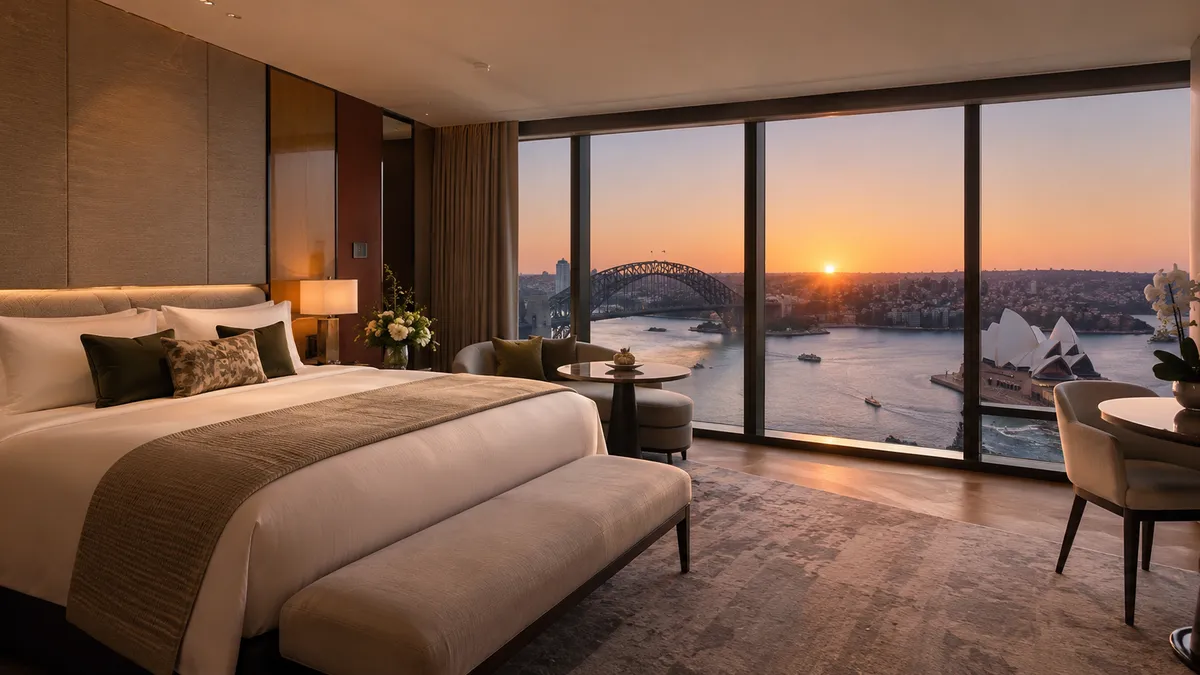
Luxury Hotels Thrive in Australia & NZ Market
Luxury hotels across Australia and New Zealand are outperforming the wider accommodation sector, supported by strong demand, higher rate premiums, and a relatively limited development pipeline. According to CBRE’s Luxury Hotel Market report, demand across major Australian and New Zealand luxury markets has grown at a compound annual growth rate of around 2.9 per cent since 2019, compared with approximately 1.3 per cent across the broader hotel market (CBRE, “Behind the Deals”, 2026). For investors and commercial property buyers, these figures highlight the strength of the luxury accommodation segment, while also reinforcing the importance of assessing each asset, its cash flow, and its finance requirements individually.
Luxury Hotel Demand Is Outpacing the Broader Market
The luxury hotel sector has maintained strong demand despite additional accommodation entering the market. Since 2019, demand across major luxury hotel markets in Australia and New Zealand has grown at approximately 2.9 per cent per year on a compound basis, more than double the roughly 1.3 per cent growth recorded across the broader hotel market. This demand has helped support occupancy in the high‑70s, with national luxury occupancy reported at around 78–79 per cent, even as new rooms have been delivered.
LUXURY HOTEL DEMAND
2.9%
Compound annual growth rate since 2019
BROADER HOTEL MARKET
1.3%
Compound annual growth rate since 2019
LUXURY OCCUPANCY
78%–79%
Stable occupancy levels despite new supply
Stable occupancy alongside stronger demand suggests luxury accommodation has continued to attract guests despite additional rooms entering the market, supported by high‑value domestic and international travellers seeking premium, experience‑led stays.
Key context: Strong market performance is useful context, but individual hotel assets can still perform very differently depending on location, operator, positioning, and cost structure.
New Supply Has Grown, but the Pipeline Remains Limited
Since 2020, 20 luxury hotels comprising approximately 3,517 rooms have opened across Australia and New Zealand, with luxury properties representing about one‑third of all rooms delivered in Australia during this period. Looking ahead, 11 luxury hotels representing around 1,979 rooms are currently under construction, with most scheduled for completion in 2026 and 2027. Beyond this cycle, the confirmed luxury pipeline becomes considerably thinner as feasibility constraints, construction costs, and financing requirements limit new projects (CBRE, 2026).
Recent Supply
20 luxury hotels opened since 2020
Approximately 3,517 rooms across Australia and New Zealand
Luxury represented around 33% of Australian room deliveries during the period
Current Pipeline
11 luxury hotels under construction
Approximately 1,979 rooms in the pipeline
Most delivery expected in 2026 and 2027
Confirmed pipeline thins beyond the current cycle
Limited future supply may influence hotel performance, but development feasibility, demand, and individual asset quality still need to be assessed carefully.

Established luxury assets can benefit from demand growth where supply remains constrained.
Transaction Values Have Risen Strongly
Transaction pricing across the luxury hotel market has increased substantially. Based on CBRE’s analysis, the median price per key increased by approximately 81 per cent, from around $396,000 during 2011–2014 to approximately $718,000 during the 2023–2026 year‑to‑date period. Since 2021, about $3.2 billion in luxury hotel assets has transacted across Australia and New Zealand, reflecting ongoing investor interest in the segment.
MEDIAN PRICE PER KEY
$718,000
Approximately 2023–2026 year‑to‑date
INCREASE
81%
Compared with approximately $396,000 during 2011–2014
TRANSACTION VALUE
$3.2 Billion
Approximate luxury hotel transaction value since 2021
CBRE reportedly advised on approximately $1.75 billion, or around 55 per cent, of transaction value during the period, underscoring the scale of institutional and specialist advisory involvement in the luxury hotel market. The increase in transaction values reflects strong investor interest, including both domestic and international capital, while still leaving a need for careful assessment of each property’s fundamentals.
International Capital Remains Part of the Market
International investment has played an important role in luxury hotel transactions. Chinese and Hong Kong buyers were particularly active between 2012 and 2018, while Singaporean and Malaysian capital has remained present, and the buyer pool has broadened to include a mix of cross‑border funds, hotel groups, and private investors. This combination of domestic and offshore capital can support liquidity and competition for established hotel assets, particularly in major Australian city markets.
Domestic Capital
Domestic participants in hotel investment may include:
Australian institutional investors
Private investors and family offices
Hotel operators and owner‑operators
Property investment groups
Specialist hospitality investors
International Capital
International participants may include:
Asian institutional investors and pension funds
Global and regional hotel groups
Offshore property investors targeting Australian CBDs
International real estate and infrastructure funds
Cross‑border private capital
The presence of international capital does not remove the need for careful asset‑level assessment. Lenders and investors generally focus on income stability, management quality, and long‑term demand drivers rather than headline transaction values alone.
Luxury Room Rate Premiums Have Widened
Luxury hotel average daily rates have increased across the markets analysed since 2019. In Australia, the average luxury ADR premium over the broader all‑scales sector has reportedly increased by around 53 per cent. The premium is estimated to have risen from about $62 in 2019 to approximately $94 in 2026, reflecting guests’ willingness to pay more for high‑quality locations, design, and service.
2019 PREMIUM
Approximately $62
2026 PREMIUM
Approximately $94
INCREASE
Approximately 53%
Higher room‑rate premiums can support hotel revenue, but occupancy, operating expenses, management structures, and debt costs remain important when assessing the overall financial performance of an asset. Lenders and investors typically consider how sustainable these premiums are in the context of local competition and demand.
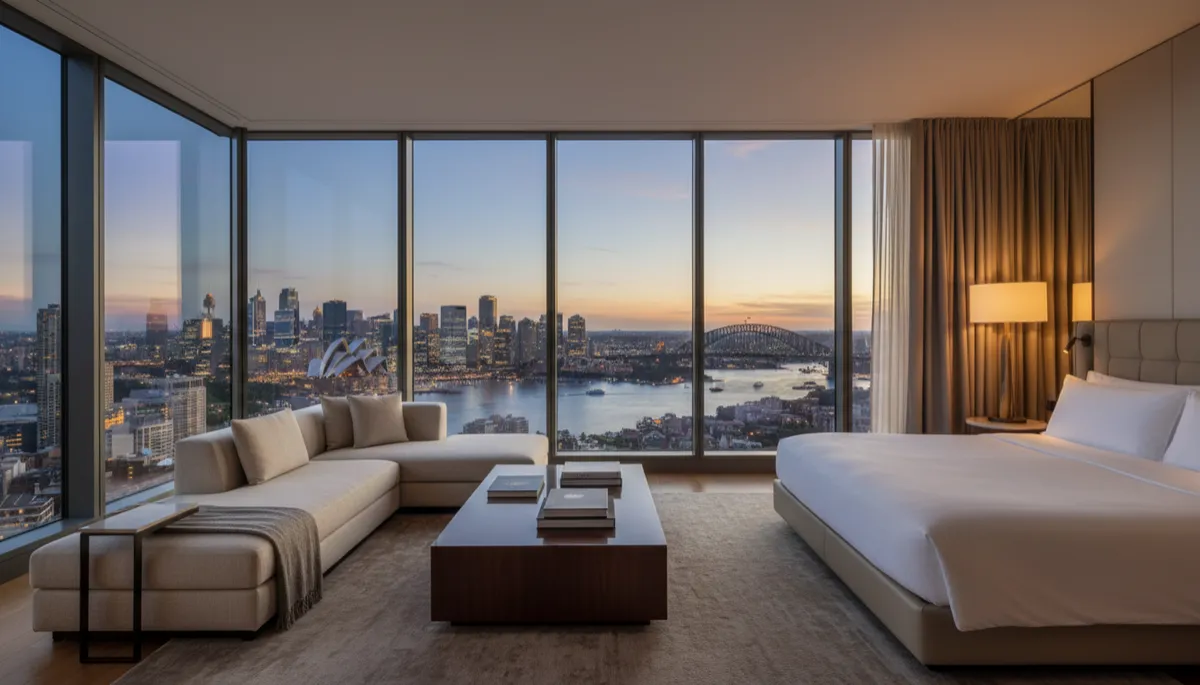
Strong room-rate premiums can enhance income but still require disciplined financial assessment.
What Commercial Property Borrowers Should Consider
Strong hotel‑sector performance does not automatically determine whether a particular property will support the finance being sought. Commercial property and hotel lending usually involves a detailed assessment of both the borrower and the underlying asset, including how resilient income may be under different trading conditions.
The Property and Business
Lenders may consider factors such as:
Historical revenue, occupancy, and average daily rate
Operating expenses and profitability trends
Hotel location, catchment, and demand drivers
Property condition and required capital expenditure
Management arrangements and operator experience
Independent valuation and marketability of the asset
The Borrower and Finance
Lenders may also review:
Deposit or equity contribution to the transaction
Existing liabilities and overall gearing levels
Borrower experience in hotel or commercial property
Loan amount, loan‑to‑value ratio, and proposed term
Ability to service the debt and interest coverage
Broader financial position and risk profile
Strong sector‑level results do not guarantee finance approval or the performance of an individual hotel investment.
Discuss Commercial Finance With First Select Finance
Hotel and commercial property finance can involve more than reviewing the purchase price. The lender may assess the underlying asset, its income profile, the borrower’s financial position, and the structure of the proposed transaction, including how the loan will be repaid over time.
First Select Finance can help you explore commercial lending options and understand the finance requirements that may apply to your circumstances, whether you are considering a luxury hotel, a broader hospitality asset, or another type of commercial property.
Speak with First Select Finance about your commercial finance options.
General information only. Not financial advice. Lending criteria, property assessment requirements, fees, and individual circumstances apply. Commercial property and hospitality investments involve risk, and past market performance does not guarantee future outcomes.
