
Understanding Balloon Payments on Car Loans
When shopping for car finance, you may come across the option of adding a balloon payment to your loan.
It is a feature that can attract attention because it may reduce regular repayments during the loan term, but it is also one that is frequently misunderstood. A balloon payment changes how the principal is repaid and leaves a larger amount to deal with at the end of the loan.
Understanding how it works, the potential benefits and the trade-offs can help you decide whether it is appropriate for your circumstances, especially in the current Australian car finance environment where interest rates and vehicle prices are front of mind for many households.

How a Balloon Payment Works
A balloon payment is a lump sum set aside for the end of a car loan term, typically representing a percentage of the original loan amount. In Australia, this structure is used on both personal and business vehicle finance, and is sometimes called a residual or final payment, depending on the lender and product type.
By deferring part of the principal until the end of the loan, regular repayments during the loan term may be lower than they would be on a comparable loan without a balloon. You still pay interest during the term, but more of the original principal remains outstanding until the final payment is due.
At the end of the term, the balloon amount still needs to be dealt with. Depending on the finance agreement and the borrower’s circumstances, this may involve paying the amount outright, refinancing it or using proceeds from selling or trading in the vehicle.
Three Key Stages of a Balloon Payment Car Loan
During the Loan
Regular repayments are made while part of the principal remains deferred as the balloon amount. You gradually reduce the balance, but not down to zero by the end of the term.
End of the Term
The agreed balloon amount becomes payable as a single lump sum. The finance agreement will outline when it falls due and how it can be paid.
How It May Be Handled
Pay the balloon from available funds
Refinance the remaining amount, subject to approval
Sell the vehicle and use the proceeds
Trade in the vehicle and apply the trade-in value to the balloon
A balloon payment reduces the amount of principal repaid through regular instalments, but it does not make the remaining principal disappear.
Balloon Payment vs No Balloon
When comparing car loans in Australia, it can be useful to look at how a balloon structure differs from a standard principal-and-interest loan with no balloon. The right approach will depend on your budget, goals and appetite for dealing with a lump sum later on.
Without a Balloon
More principal repaid through regular instalments
Generally higher regular repayments compared with an otherwise equivalent loan using a balloon
No large scheduled balloon amount at the end
Loan structure may be simpler to plan around
With a Balloon
Part of the principal is deferred to the end of the term
Regular repayments may be lower during the loan term
A larger amount remains payable at the end as a lump sum
A clear plan is needed for the final payment
Total interest may be higher, depending on the loan terms
Actual repayments, interest costs and total amounts payable depend on the loan amount, interest rate, fees, term, balloon amount and lender conditions. Comparison rates, where provided, can help you understand the impact of fees and charges over the life of the loan.
When a Balloon Payment May Suit Your Situation
A balloon payment may be considered by borrowers who have a specific reason for wanting lower regular repayments during the loan term and a clear plan for dealing with the remaining amount later. In the current Australian market, where interest rates have risen and many households are managing competing financial priorities, this structure can be appealing but needs careful thought.
Business Cash Flow
For some business owners, lower regular repayments may help retain more working capital while the vehicle remains in service. A balloon can be one way of aligning repayments with expected business income, subject to tax, accounting and lender considerations.
Irregular Income
Borrowers with variable or irregular income, such as contractors or commission-based professionals, may prefer lower scheduled repayments while planning how future available funds could be used, subject to lender policies and loan conditions.
Planned Vehicle Upgrade
Some borrowers who expect to replace their vehicle after several years may consider a balloon structure as part of their vehicle and finance planning. They may anticipate selling or trading in the car and using the proceeds towards the balloon, while understanding that actual values can differ from expectations.
Whether these benefits apply will depend on the borrower’s circumstances, the finance structure and the terms offered by the lender. It is important to consider how a balloon fits alongside other commitments such as home loans, personal loans and everyday living costs.
A balloon payment should be considered as part of the overall finance structure, not simply as a way to achieve the lowest possible monthly repayment.
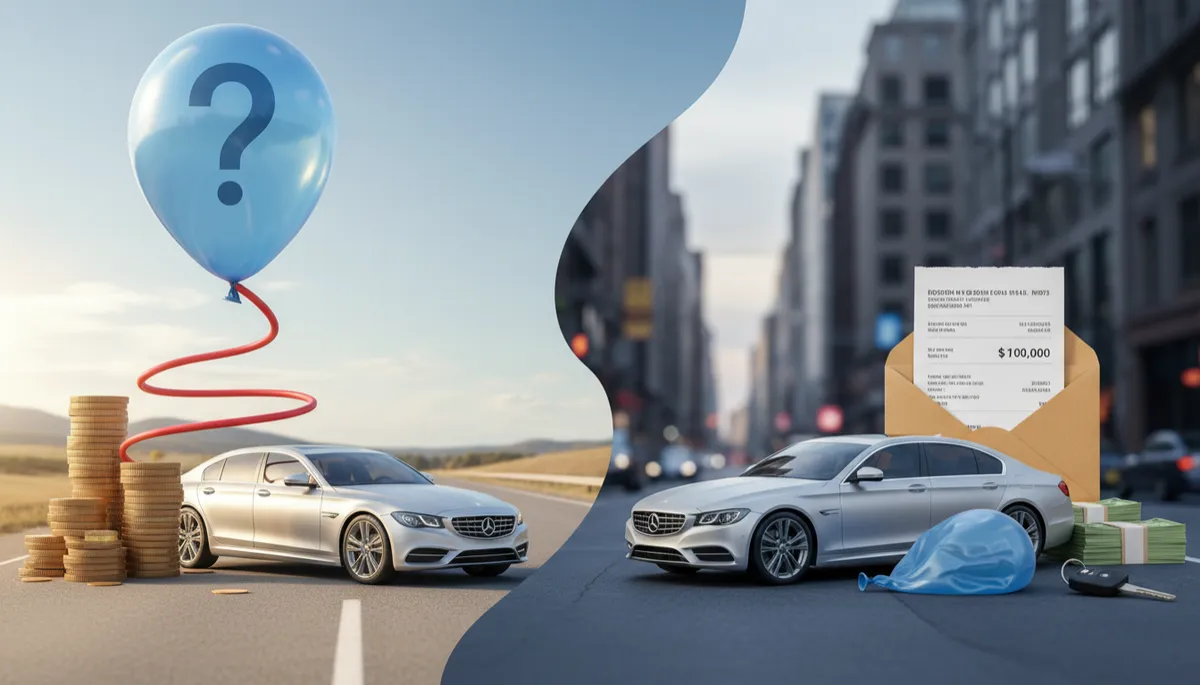
Planning how to handle the final payment can make vehicle upgrades more manageable.
The Trade-Off
One of the most important things to understand about a balloon payment is that interest may continue to accrue on the amount of principal that remains outstanding. Because more principal remains unpaid during the loan term, the total interest paid over the life of the loan may be higher than on an otherwise equivalent loan without a balloon payment.
Lower regular repayments therefore do not necessarily mean a lower overall finance cost. This is particularly relevant in Australia’s current interest rate environment, where the Reserve Bank has reported higher average rates on new fixed-term loans, including car loans. Understanding the total amount payable can help you avoid focusing solely on the monthly figure.
Potential Benefit
Lower scheduled repayments during the loan term
More cash retained for other expenses or opportunities
Different cash flow structure that may align with your plans
Potential Trade-Off
Larger final payment to manage at the end of the term
More principal remains outstanding for longer
Potentially higher total interest cost compared with a similar loan without a balloon
Need for a clear end-of-term plan to avoid last-minute pressure
Compare the total amount payable over the full loan term, not just the regular repayment amount.
Understand Residual Value Risk
There is also a risk that the vehicle may be worth less than the balloon amount when the loan reaches the end of its term. Cars depreciate over time, and market conditions can change. If the vehicle is sold or traded in for less than the amount required to clear the balloon, the borrower may need to cover the difference from other funds.
Simplified Example of a Shortfall
Balloon Payment | $20,000 |
Vehicle Value at End of Term | $17,000 |
Potential Shortfall | $3,000 |
Simplified example only.
Actual vehicle values depend on factors such as age, kilometres travelled, condition, service history, market demand and the type of vehicle. Trends such as the growing popularity of electric and low-emission vehicles, or changes in fuel prices, can also influence resale values over time.
Do not assume the future sale or trade-in value of the vehicle will automatically cover the balloon payment.
Plan for What Happens at the End
A balloon payment works best when the borrower understands how the final lump sum may be handled before entering the finance agreement. Thinking ahead can help you avoid relying on assumptions about future income, refinancing or resale values that may not eventuate as expected.
Pay It Out
Use available savings or other funds to clear the balloon in full. This option suits borrowers who have deliberately set funds aside over time for the final payment.
Refinance
Apply for new finance to repay the outstanding amount, subject to lender approval and your circumstances at that time. Future approval, rates and terms are not guaranteed.
Sell the Vehicle
Use sale proceeds towards repaying the balloon. If the sale price is lower than the balloon amount, you may need to contribute additional funds to clear the loan.
Trade In the Vehicle
Apply the trade-in value towards the outstanding amount and potentially arrange finance for another vehicle. The trade-in value will depend on the vehicle and market conditions at the time.
None of these options should be assumed in advance. Future refinancing remains subject to lender criteria, while vehicle sale or trade-in values can change. Having a realistic back-up plan can provide additional confidence.
It Is Not the Right Structure for Everyone
A balloon payment may suit some borrowers, but it is not automatically the right structure simply because the regular repayments are lower. Without a clear plan for the lump sum at the end of the loan, the final payment can create financial pressure that the lower repayments during the term did not prepare the borrower for.
In recent Australian research, many borrowers reported regretting aspects of their car finance decisions, often due to rushed choices and a focus on short-term affordability rather than total cost and structure. Taking time to compare options can help you avoid similar concerns.
Questions to Ask Before Choosing a Balloon
Why do I want lower regular repayments?
How large will the balloon payment be as a percentage of the loan?
How much interest will I pay overall compared with a loan without a balloon?
What do I expect to do with the vehicle at the end of the term?
How will I fund the final payment if plans change?
Could I manage the loan if my circumstances or interest rates changed?
Loan Details to Compare
Interest rate
Comparison rate where applicable
Balloon amount and percentage of the original loan
Loan term and frequency of repayments
Regular repayment amount and total amount payable
Fees, charges and early repayment conditions
The lowest monthly repayment is not necessarily the lowest-cost or most suitable finance option.
Compare Car Finance Options With First Select Finance
Car finance structures can affect your regular repayments, total interest cost and the amount you need to deal with at the end of the loan. Features such as balloon payments, loan terms, fees and residual structures all contribute to how manageable and cost-effective your finance may be over time.
First Select Finance can help you compare car finance options and understand how different repayment structures may work in your circumstances, whether you are considering a standard loan, a balloon structure or other vehicle finance options in Australia.
Speak with First Select Finance about your car finance options and how different structures may align with your goals and risk appetite.
General information only. Not financial advice. Eligibility criteria, interest rates, fees, charges and lending conditions apply. Vehicle values and refinancing options can change, and future finance approval is not guaranteed.
